You see even if the project looked legit, and it had a sea-grant from MIT (that MIT) I really did not know where to start. The pages were describing soldering electronic elements I did not even know the names of. Googling in this case could not help. I contacted some old university friends, most people were busy with family life these days, so I reached out to my climbing friends. One of those people was Candice, a Canadian doing her Ph.D. studies in plasma physics here in Norway. (Yeah I know it sounds totally cool, plasma physics). Candice proved to be extremely helpful. She decided she can just sit down ad prepare the BOM (Bill Of Materials) – what they call the shopping list in the PRO world. The BOM was basically a spreadsheet full of cryptic labels indicating different components – such as “ERJ-6GEYJ102V” for a resistor of 1 K Ohm, or “ATMEGA328PB-AU” for the processor. The list consisted of 50 of them nicely arranged into 3 different parts – the sensor one, which should read the water pressure, the CPU one that should do all the “thinking” and finally the power board, which should store the data in the memory card and yes, power the whole device. Each part was a PCB “Printed Circuit Board” basically a board with already printed paths that would work as wires and connect all 50 elements of the whole sensor together. But back then I did not know much about this – I did not even know that one can order and print one, or that companies producing the boards even exist. Candice showed me that the project contained so-called “gerber” files, a fancy name for a technical design of the board. And that I can contact companies like “Beta Layout” and order my board.
To ppl like me, with only basic electronic knowledge (like yeah, I do know the current exists and I needed to learn how a semiconductor works as part of my CS education, but that’s roughly it), the electronic world was funky and cryptic to say at least.
Even with the complete shopping list done for me, placing an order was overwhelming and a daunting task. To make it even worse I did my shopping in the middle of corona lockdowns, which combined with the component crisis made the task even harder. More often than not the parts I ordered would end up in a “backlog” list *waiting list – with up to 2 years of waiting time… Difficulties with orders forced me to become creative and search for the missing parts at AIiExpress or eBay kind of sites.
When the first batch of ordered goods- freshly printed boards arrived, still sealed in protective plastic – things started to look real…
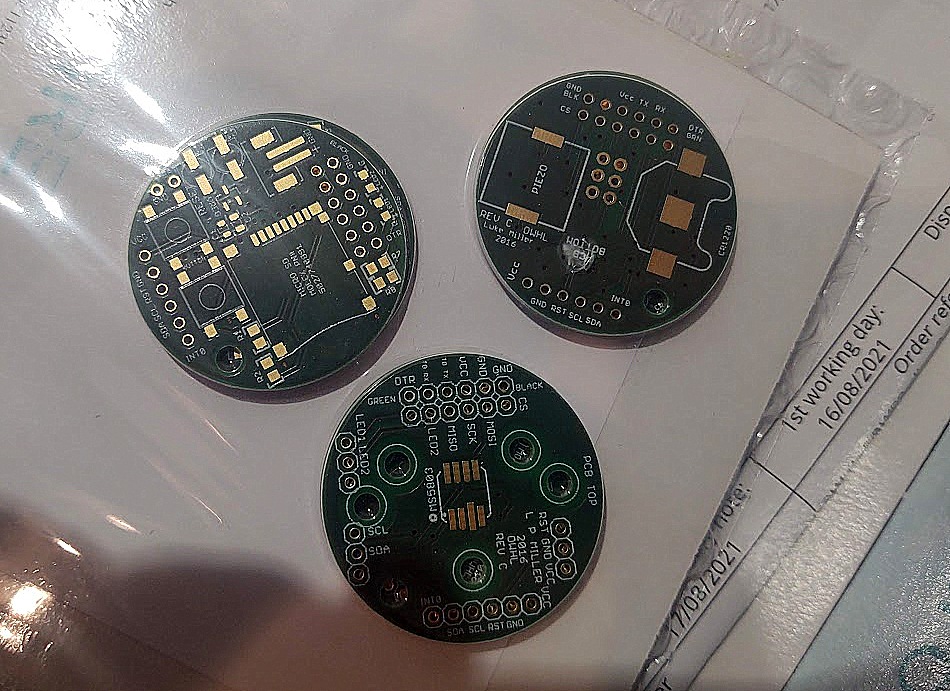
 Surfcast
Leave a comment